
P1456 Honda Code - Evaporative Emissions Control System Leakage Fuel Tank
Quick Answer
The P1456 code for Honda vehicles indicates a problem with the evaporative emissions control system, specifically related to a leak in the fuel tank. Common causes include Loose or Damaged Gas Cap: A loose or damaged gas cap can cause a leak in the evaporative emissions control system, Faulty Purge Control Valve: The purge control valve is responsible for controlling the flow of fuel vapors, If it malfunctions, it can lead to a leak. Severity is High - diagnose this code as soon as possible. Driving is not recommended if the warning light is flashing, the engine runs poorly, or safety-related symptoms are present.
- What it means
- P1456 Honda indicates Evaporative Emissions Control System Leakage Fuel Tank.
- Common causes
- Common causes include Loose or Damaged Gas Cap: A loose or damaged gas cap can cause a leak in the evaporative emissions control system, Faulty Purge Control Valve: The purge control valve is responsible for controlling the flow of fuel vapors, If it malfunctions, it can lead to a leak.
- Severity
- High - diagnose this code as soon as possible.
- Can I drive?
- Driving is not recommended if the warning light is flashing, the engine runs poorly, or safety-related symptoms are present.


Fix Your Car Smarter
Try the New AutoCodes App!
Get complete OBDII diagnostics, repair solutions, and cost estimates, plus AI chat support on demand.

Code P1456 Honda Description
The P1456 code for Honda vehicles indicates a problem with the evaporative emissions control system, specifically related to a leak in the fuel tank. This system is designed to capture and store fuel vapors from the fuel tank and prevent them from escaping into the atmosphere. When there is a leak in the system, it can lead to increased emissions, reduced fuel efficiency, and potential environmental harm. The issue may stem from a damaged or loose gas cap, a faulty purge control valve, a cracked fuel filler neck, or a leak in the fuel tank itself.

Common Causes of P1456 Honda
- Loose or Damaged Gas Cap: A loose or damaged gas cap can cause a leak in the evaporative emissions control system.
- Faulty Purge Control Valve: The purge control valve is responsible for controlling the flow of fuel vapors. If it malfunctions, it can lead to a leak.
- Cracked Fuel Filler Neck: A crack in the fuel filler neck can allow fuel vapors to escape.
- Leak in Fuel Tank: A leak in the fuel tank itself can also trigger this code.
Symptoms of P1456 Honda
- Check Engine Light: The most common symptom associated with this code is the illumination of the check engine light on the vehicle's dashboard.
- Fuel Smell: A strong smell of gasoline inside or around the vehicle may indicate a fuel vapor leak.
- Decreased Fuel Efficiency: A leak in the evaporative emissions control system can lead to increased fuel consumption.
- Failed Emissions Test: If the vehicle is due for an emissions test, it may fail due to increased emissions caused by the leak.
How to Fix P1456 Honda
- Inspect Gas Cap: Check the gas cap for any signs of damage or wear. Replace if necessary.
- Inspect Purge Control Valve: Test the purge control valve to ensure it is functioning properly. Replace if faulty.
- Check Fuel Filler Neck: Inspect the fuel filler neck for cracks or damage. Repair or replace as needed.
- Pressure Test Fuel Tank: Perform a pressure test on the fuel tank to identify any leaks. Repair or replace the fuel tank if necessary.
- Clear Code: After completing the repairs, clear the diagnostic trouble code and test drive the vehicle to ensure the issue is resolved.
Cost to Fix P1456 Honda
The cost of repairing a P1456 code can vary depending on the specific cause of the issue and the extent of the repairs needed. On average, the cost of parts for this repair can range from $50 to $200, while the labor costs can range from $100 to $300. Therefore, the total cost for resolving this issue typically falls between $150 and $500. It's important to note that these are rough estimates, and actual costs may vary based on the factors mentioned earlier.
Tech Notes for P1456 Honda
There is a Honda factory service bulletin with information on how to diagnose the P1456 on the following Honda models:
1998 Honda Accord
1999 Honda Accord
2000 Honda Accord
1998-2000 Honda Accord Factory Service Bulletin OBDII Code p1456
Troubleshooting DTC P1456 (EVAP system leakage [fuel tank system]) in a 2003-2004 Pilot? Pinch off all the hoses between the fuel filler neck and the fuel tank, and retest. If the leak stops, replace the fuel fill cap first. If you've still got the leak after replacing the fuel fill cap, then replace the fuel filler pipe. There's an O-ring between the plastic and threaded part of the filler neck that may be leaking.
User Submitted Video
Need more information about the P1456 Honda code?
Need more information on how to fix the P1456 Honda code? Get Access to Factory Service Manuals
Need Help with the Code?
Get the P1456 Honda code diagnosed by a professional: Find a repair shop in your area
Information for Specific Honda Models
- P1456 1996 Honda Civic — Evaporative Emissions Control System Leakage Fuel Tank
- P1456 1997 Honda Civic — Evaporative Emissions Control System Leakage Fuel Tank
- P1456 1998 Honda Civic — Evaporative Emissions Control System Leakage Fuel Tank
- P1456 1999 Honda Civic — Evaporative Emissions Control System Leakage Fuel Tank
- P1456 2000 Honda Civic — Evaporative Emissions Control System Leakage Fuel Tank
Frequently Asked Questions about P1456 Honda Code
1. What are the common symptoms of OBDII code P1456 in a Honda related to the evaporative emissions control system leakage in the fuel tank?
- Common symptoms may include the check engine light illuminating, a gasoline smell near the vehicle, and potential issues with passing emissions tests.
2. What are the typical causes of OBDII code P1456 in a Honda indicating a leak in the evaporative emissions control system from the fuel tank?
- The code can be triggered by a loose or damaged gas cap, a leak in the fuel tank, a faulty fuel tank pressure sensor, or issues with the evaporative emissions canister.
3. How can I diagnose the OBDII code P1456 in my Honda related to the evaporative emissions system leakage from the fuel tank?
- Diagnosis usually involves checking the gas cap for tightness, inspecting the fuel tank for leaks, testing the fuel tank pressure sensor, and examining the evaporative emissions canister for any defects.
4. Are there any simple repair tips for resolving OBDII code P1456 in a Honda associated with a leak in the fuel tank's evaporative emissions control system?
- Start by ensuring the gas cap is properly tightened. If the issue persists, inspect the fuel tank and associated components for leaks, and consider replacing any faulty parts identified during diagnosis.
5. Can driving with OBDII code P1456 in a Honda indicating a leak in the evaporative emissions system from the fuel tank cause further damage?
- While driving with this code may not cause immediate harm to the vehicle, it is important to address the underlying issue promptly to prevent potential fuel leaks, emissions problems, or other complications.
6. Is it safe to continue driving my Honda with OBDII code P1456 related to the evaporative emissions control system leakage from the fuel tank?
- It is generally safe to drive the vehicle for a short period after the code appears, but it is recommended to have the issue diagnosed and repaired as soon as possible to prevent any potential hazards.
7. Can a DIY enthusiast fix OBDII code P1456 in a Honda caused by a leak in the fuel tank's evaporative emissions control system?
- Depending on your skill level, you may be able to address the issue yourself by checking the gas cap, inspecting the fuel tank, and replacing any damaged components. However, professional diagnosis and repair may be needed for more complex problems.
8. How much can I expect to pay for repairing OBDII code P1456 in my Honda related to a leak in the evaporative emissions control system from the fuel tank?
- The cost of repairs can vary based on the specific cause of the issue and the labor rates in your area. It is advisable to get a few quotes from reputable mechanics to compare prices.
9. Will resetting the check engine light resolve OBDII code P1456 in a Honda indicating a leak in the evaporative emissions system from the fuel tank?
- Resetting the check engine light may temporarily turn it off, but it will not fix the underlying problem causing the code. It is essential to diagnose and address the root cause to prevent the code from reappearing.
10. How can I prevent OBDII code P1456 in my Honda related to a leak in the evaporative emissions control system from the fuel tank in the future?
- To prevent this code from reoccurring, make sure to tighten the gas cap securely after refueling, perform regular inspections of the fuel tank and emissions components, and address any issues promptly to maintain proper functionality.
Discuss the causes and fixes for P1456 Honda OBDII Code
-
hi i have a 01 civic it has a code p1457 says leak near evap canister we took it out and looked at it and did not see any cracked hoses and the valve on the side we tested it it seems to operate fine
now that we put it back together it will not start it wants to start with starting fluid and when you turn the key on we can hear the fuel pump kick on and it spits out a little bit of fuel at the fuel rail -
Disconnected hoses or connector on the EVAP system should not cause a no start situation. You could start by checking the connectors around the parts you removed.
-
I have an 05 Civic with the P1456 code that won't go away.
I tried tightening the fuel cap, etc. to the point where I went and bought a new fuel cap. But the code still keeps coming back.
The fuel cap that replaced it doesn't look exactly the same as the factory one, should that matter? Or do I need to get it smoke tested for leaks at this point?
-
The look of the cap shouldn't matter, checking the EVAP system with an smoke machine it's probably your best next step.
-
2002 honda civic LX 1.7 L code P1456 I replace a new fuel cap and clear a code now the code is gone. must be the CAP
-
In the case of a loose fuel cap, how long does it take for the CEL to come on?
-
I have a Civic 05 with the same code. I just found out a common problem is an O-ring on the filler fuel pipe, just between the top metal piece (where the cap screws) and the plastic piece. It looks like to fix it, the rear left wheel has to be taken out. I'll see my stealership tomorrow.
-
Could somebody help me please I have the code p1456 on my Honda Accord 1998.I change the gas cap that did not help.i change the shut off valve that did not work.when a take the car to the shop did a smoke best no leak was found.my car still smell like gas.plaeae somebody help me smell the gas is making me sick.
-
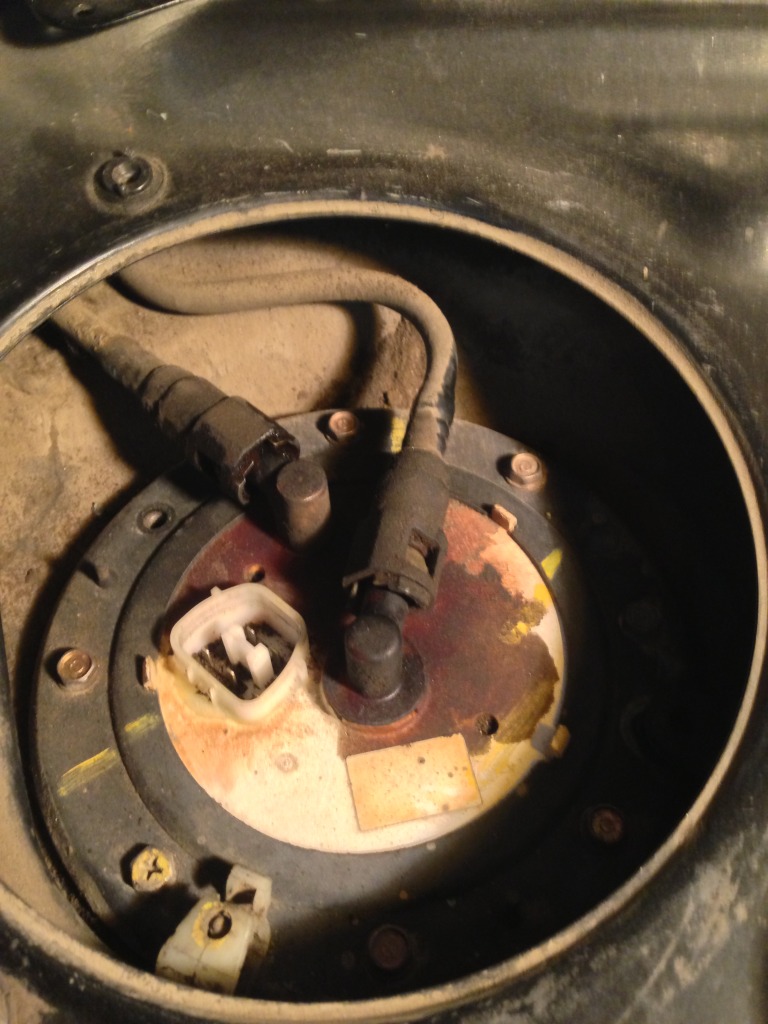
Unfortunately there are many place where could be a gas leak. If the code is combine with the gas smell, it's very likely that there is gas leak on top of the gas tank, where the fuel lines are connected to the fuel pump. You have to remove the trunk cover to access the fuel pump.
Here is an image I found online: http://honda-tech.com/attac...
-
If there is a gas leak, then you may have to replace the gas tank. If you tried everything I'm not sure what else I can recommend.
-
Thanks I guess that my next step there is no sign of leak on the gas tank
-
-
Hi Ganesh, I too have the same exact problem (havent yet checked in my trunk to see if there is any leak on the fuel pump), but have you been able to identify the problem? I too took it to a mechanic shop, they did the smoke test and said they could not find any issues. My mileage had gone down, but after using premium gas, the mileage seems to have gotten back to where it was earlier. I smell a lot of gas around my fuel tank, since you have the same/similar issue and if you have been able to figure out the problem, please let me know. I did not replace my shut-off valve yet, should I try doing that even though the mechanic stated everything was fine when he did the smoke test? I will first check the trunk and post pictures. Your help is much appreciated!
@OBDIITech - I am in Atlanta, would you suggest a mechanic that can look at this issue for me? I replaced my gas cap but the code has not gone and the smell of gas makes it clear that there is something wrong. I dont want to go to the stealer! I want a reliable and honest mechanic that can do the job for me. Thanks! -
I don't know what to tell u too do.my next step is to change the filler neck that next too the gas tank.I will keep u up to date about that.I did change did change the shut off vavle same problem.Did u see any leak coming from any where?If is not the filler neck I next thing to change is the gas tank.Where do u live let me know I have a good Mechinics he work for Honda he is trying to help me out.I check almost all the part where gas is coming from no luck.
-
I have 04 Honda Pilot with 100k miles. Codes reads P1456. Cleared and tighten cap. Cap looks new also. Light came back in a few days. Any ideas?
-
Unfortunately there must be another leak somewhere near the gas tank or canister. Next step is to check all the hoses around the EVAP canister and check for loose or cracked hoses. If you can't find anything, then take it to a shop and have them use a smog machine to find the leak.
-
My new gas cap did not fix this error code. It must be the EVAP canister, but I just replaced the EVAP canister 5 years ago.
-
Next step is to check for loose or damage hoses or components around the canister. If no damage is found, then you can either use a smoke machine to find the leak or start replacing components. One of the most common problems is the Canister Vent Shut Valve Solenoid.

Click here to enlarge image -
Canister Vent Shut Valve Solenoid was replaced along with the canister 5 years ago (20,000 miles ago). Several months ago the splash-prevention flap inside the fuel filler neck broke off and there is now not even a slight release of fuel tank pressure when removing gas cap. Check engine light came on several weeks after fuel filler neck flap broke off and this makes me wonder if there is a leak in the fuel filler neck that is causing the check engine light. New OEM gas cap did not help. I will smoke fuel filler neck and check hoses for leaks first. **** The most upsetting thing is that there are nearly $500-worth of parts just to collect fuel vapors, but it costs just as much to figure out which part or parts are not working. **** There should be sensors and codes that show exactly which parts are at fault, not "SOME PART OR PARTS BETWEEN THE CANISTER AND THE FUEL TANK WILL CAUSE YOU TO NOT BE ABLE TO REGISTER YOUR VEHICLE ... SCHMUCK". Frustrating!
-
I agree. Fortunately newer vehicles have way more sensors to indicate with better precision what the problem is. The problem is that the more sensors in the vehicles the more chances are that those sensors fail. I hope you can find the problem with your vehicle.
-
I have acura mdx 2002 model with error code 1456, what is the problem with it
-
There are many things that could set the P1456 code. The first thing you need to do is check the gas cap. Inspect and tight the gas cap, and clear the code. If the problem comes back, then you may have to have a mechanic check for EVAP leaks.
-
2003 hond civic and I have very strong fume smell in the rear end and code p1456?
-
The P1456 code means that there is Fuel Gas leak in the EVAP/Fuel system, my suggestion is to have a repair shop check underneath your Civic for damage hoses or EVAP/Fuel components.

Fix Your Car Smarter
Try the New AutoCodes App!
Get complete OBDII diagnostics, repair solutions, and cost estimates, plus AI chat support on demand.